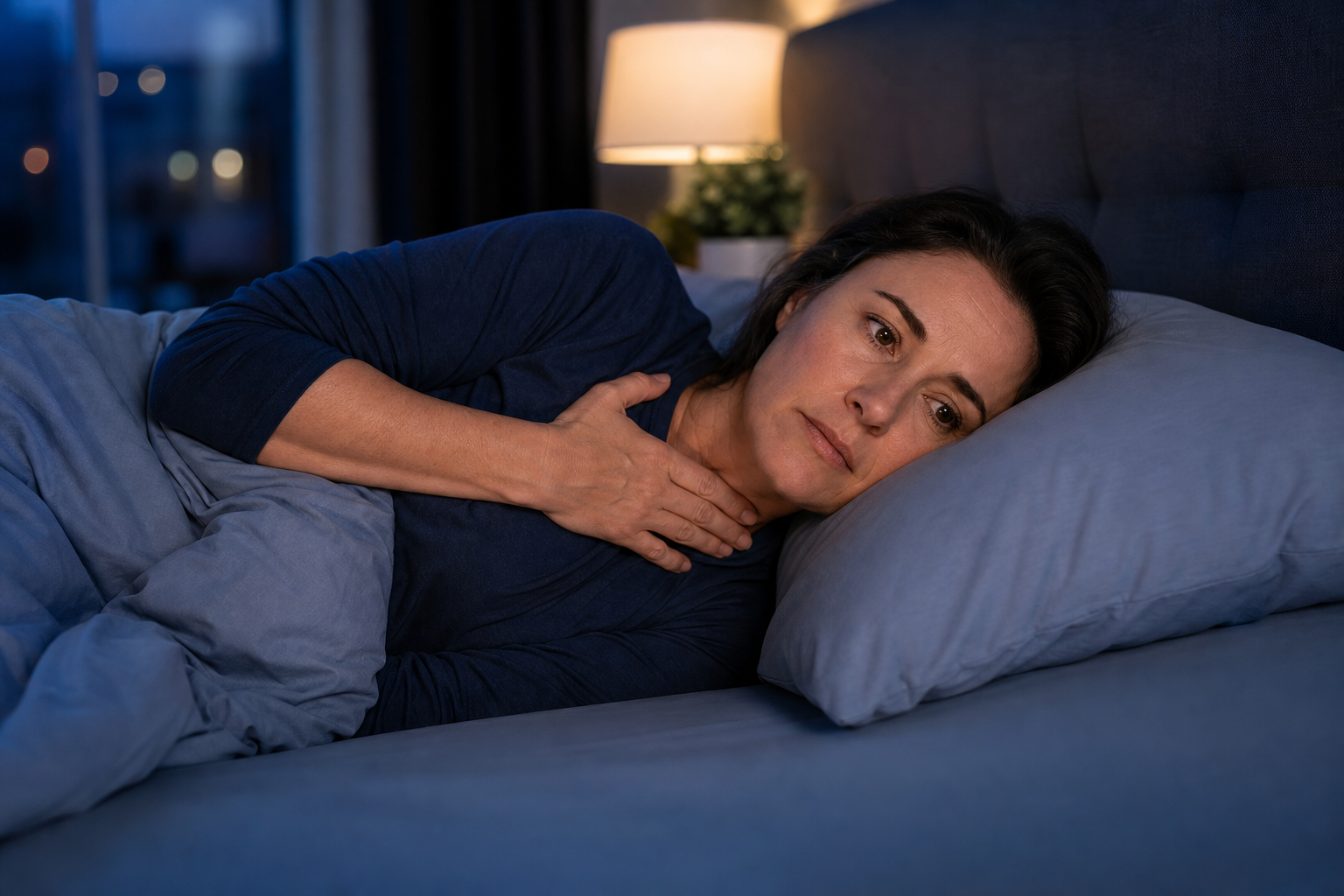
You roll onto your left side to get comfortable, and within a minute your heart feels like it is racing, pounding, or skipping. You were fine on your back or your right side. Now you are lying there wondering if something is wrong.
Heart palpitations when lying on left side are a pattern we hear about often at Prime Heart and Vascular. The timing and position matter. For many people, left-side sleeping triggers a noticeable heartbeat because of how the heart sits in the chest, how the vagus nerve responds, or how reflux and breathing change in that position. For others, lying on the left is simply when they first notice a rhythm problem that was there all along.
Patients in Plano, Frisco, Allen, and nearby North Texas communities often tell us their heart only acts up at night, and only on one side. That detail is useful. It helps your doctor separate position-related triggers from conditions that need cardiac testing.
What heart palpitations feel like at night
Heart palpitations are the sensation that your heart is beating too fast, too hard, too slow, or in an irregular pattern. Some people describe a flutter. Others feel a thump, a pause, or pounding in the neck or ears.
Nighttime palpitations can feel more intense because the room is quiet and you are not distracted. When you lie down, blood flow shifts, breathing changes, and you may become more aware of each beat. If symptoms show up mainly when you turn to your left, that position clue belongs in the conversation with your doctor.
Why lying on your left side can trigger palpitations
Sleep position affects the heart more than most people expect. Several mechanisms can explain why the left side seems to be the trigger.
Heart position and pressure in the chest
When you lie on your left side, gravity shifts the heart slightly within the chest. The left ventricle may sit closer to the chest wall. Some people feel each beat more strongly against the ribs or mattress. That is not always a dangerous rhythm change. It can be a mechanical sensation that feels like pounding or racing even when the heart rate is normal.
Vagus nerve stimulation
The vagus nerve connects your brain, heart, and digestive tract. Pressure on the left side of the chest and abdomen can stimulate it. In some people, vagus nerve activity slows the heart briefly, then triggers a rebound fast heartbeat or skipped beats. Others feel fluttering when they roll onto the left. This pattern is common enough that cardiologists ask about sleep position during palpitation workups.
Acid reflux and GERD overlap
Lying on the left side can worsen reflux for some patients because of how the stomach and esophagus align. Heartburn and palpitations often overlap because the esophagus and heart share nerve pathways. Chest fluttering that improves when you switch to your right side or elevate your head may have a reflux component. Treating reflux sometimes reduces sensations that feel like heart rhythm problems.
Autonomic nervous system shifts at bedtime
As you wind down for sleep, your autonomic nervous system changes. Heart rate and blood pressure typically dip. Rolling into a new position during that transition can briefly unsettle the rhythm. If you notice palpitations mainly during the first few minutes on your left side, that timing fits a position-and-autonomic response rather than a fixed arrhythmia.
Left side vs right side: what patients notice
Many patients report that palpitations start on the left and stop when they roll to the right or back. That pattern suggests position plays a real role. Others feel symptoms in any lying position but worse on the left.
Right-side sleeping may reduce reflux symptoms for some people, which can indirectly calm chest sensations. Back sleeping can increase snoring and sleep apnea in certain patients, which is a separate trigger for nighttime heart racing. Your personal pattern helps narrow the cause.
If you have not read our guide to nighttime symptoms, our post on heart palpitations at night covers broader night triggers including anxiety, caffeine timing, and sleep apnea overlap.
Common non-dangerous causes of left-side palpitations
Not every flutter when you turn left means heart disease. These are frequent explanations we discuss with patients.
- Stronger heartbeat sensation: The heart sits closer to the chest wall on the left, so beats feel more noticeable
- Benign extra beats (PVCs): Premature ventricular contractions can feel worse in certain positions
- Reflux or indigestion: Evening meals plus left-side lying can combine two triggers
- Dehydration or electrolyte shifts: Hot Texas days and low fluid intake can make the heart feel less steady at night
- Stress and poor sleep: A racing mind at bedtime can amplify awareness of normal beats
The American Heart Association notes that palpitations are common and often harmless, but recurring or worrisome symptoms deserve medical evaluation to rule out treatable rhythm problems.
When left-side palpitations may signal a rhythm problem
Position can unmask an underlying arrhythmia. You should take symptoms more seriously if palpitations:
- Happen every night on the left side and last more than a few minutes
- Occur in any position, not just the left
- Feel irregular, chaotic, or faster than your usual exercise heart rate
- Come with chest pain, pressure, or tightness
- Are paired with shortness of breath, dizziness, or fainting
- Wake you repeatedly and interfere with sleep most nights
Atrial fibrillation, supraventricular tachycardia, and other rhythm disorders may feel worse when lying down because you notice them more, not because sleep position causes the arrhythmia itself. Testing can tell the difference.
How reflux, meals, and bedtime habits interact
Left-side palpitations often have a digestive angle. Large or late dinners, spicy food, alcohol, and lying down soon after eating can worsen reflux. When reflux flares, chest fluttering may follow.
Practical steps that help some patients
Try finishing dinner at least two to three hours before bed. Stay upright after eating instead of collapsing onto the couch. Elevate the head of the bed slightly if reflux is a known issue. Notice whether symptoms improve when you sleep on your right side or with extra pillows.
These changes do not replace cardiac evaluation if symptoms are frequent or severe. They can still reduce how often position and reflux stack on the same night.
Sleep apnea and nighttime heart racing
Obstructive sleep apnea causes breathing pauses during sleep. Oxygen drops and stress hormones can raise heart rate and trigger irregular beats. Many patients discover palpitations at night before they know they have sleep apnea.
Snoring, gasping, morning headaches, and daytime sleepiness are clues worth sharing with your doctor. Treating sleep apnea often improves nighttime heart symptoms. If you sleep on your left but also snore heavily, both factors may be in play.
What you can try before your appointment
If symptoms are mild and you have no red-flag symptoms, these steps may help you learn whether position is the main trigger.
Track position and timing
For one week, note when palpitations start, how long they last, and which side you were on. Include meal timing, caffeine, alcohol, and reflux symptoms. A simple log beats guessing from memory.
Experiment with sleep position
Try sleeping on your right side or slightly elevated for several nights. If palpitations fade, tell your doctor. That does not mean you can skip evaluation if symptoms were severe, but it adds useful context.
Address reflux and evening meals
Lighter dinners, earlier eating, and avoiding known reflux triggers may reduce left-side chest fluttering. Hydrate during the day, especially during North Texas summer heat when fluid needs go up.
Calm the bedtime window
Limit screens, caffeine, and heavy exercise right before bed. A steady wind-down routine can lower the adrenaline that makes you hyper-aware of your heartbeat.
What testing may involve
Your cardiologist will start with your history. Be ready to describe what the palpitations feel like, how long they last, and whether they stop when you change position. Mention reflux, snoring, thyroid disease, anemia, and family history of rhythm problems.
Depending on your symptoms, testing may include:
- An electrocardiogram (EKG or ECG)
- A heart monitor worn for a day or longer to capture episodes
- Blood work for thyroid function, anemia, electrolytes, or blood sugar
- An echocardiogram to assess heart structure and function
- A sleep study if apnea is suspected
The goal is to match testing to your risk so you get a clear answer without unnecessary worry.
When to see a cardiologist in Plano or Frisco
Consider scheduling a visit if left-side palpitations are frequent, worsening, interfering with sleep, or happening with chest pain, shortness of breath, dizziness, or fainting. That is especially true if you have high blood pressure, known heart disease, diabetes, or risk factors you have been meaning to address.
Prime Heart and Vascular evaluates palpitations, chest pain, shortness of breath, and irregular heartbeat through our heart specialist services. Our palpitation specialist team helps patients in Collin County and the wider Dallas area sort position-related symptoms from rhythm problems that need treatment.
Heart palpitations when lying on your left side are often tied to how the heart sits in the chest, vagus nerve response, or reflux that flares in that position. For many people, changing sleep position or addressing evening meals makes a real difference. For others, left-side symptoms are the first sign that a rhythm issue needs attention. Either way, you deserve a clear answer.
If your heart races when you roll left at night, start by tracking the pattern. Then talk with a cardiology provider who will take the symptom seriously and help you decide when switching sides is enough and when testing is the next step.
Schedule an appointment with Prime Heart and Vascular to talk with a cardiology provider about heart palpitations that happen when you lie on your left side.
Left-side sleeping and heart rhythm questions
Brief palpitations when you first roll onto your left side can happen in otherwise healthy people. Gravity shifts the heart within the chest, and the left ventricle may sit closer to the chest wall, so each beat can feel stronger. Vagus nerve stimulation and reflux can add to the sensation. That does not mean every left-side flutter is harmless. If palpitations are frequent, last a long time, happen in any position, or come with chest pain, shortness of breath, dizziness, or fainting, schedule a cardiology evaluation to rule out a rhythm problem.
Your heart may race on your left side because of heart position, vagus nerve response, reflux, or autonomic shifts as you fall asleep. Some people feel a stronger heartbeat without a true rhythm change. Others have premature beats or an arrhythmia that becomes noticeable when lying down. Track when symptoms start, how long they last, and whether they stop when you roll to your right side or back. Share that pattern with your doctor because it helps narrow the cause and guide testing.
Trying your right side or a slightly elevated position for a week is reasonable if symptoms are mild and you have no red flags like chest pain, fainting, or severe shortness of breath. Many patients feel better when reflux and position triggers are reduced. Do not use side switching as a substitute for cardiac care if palpitations are frequent, worsening, irregular, or paired with other symptoms. A cardiology visit can confirm when position change is enough and when monitoring or treatment is needed.
Yes. Lying on the left can worsen reflux for some people because of how the stomach and esophagus align. Heartburn and palpitations share nerve pathways, so chest fluttering may improve when reflux is treated or when you sleep on your right side with the head elevated. Large or late meals, alcohol, and spicy food can stack reflux on top of position-related sensations. Reflux does not explain every palpitation, so new or severe symptoms still deserve heart evaluation.
Nighttime makes you more aware of your heartbeat because the room is quiet and distractions fade. If you prefer sleeping on your left, that is when position-related triggers combine with bedtime autonomic changes. Reflux after dinner, dehydration from the day, stress, and sleep apnea can also flare at night. Symptoms that appear only on the left side suggest position plays a role, but underlying rhythm problems may still need testing if episodes are frequent or worrisome.
Pressure on the chest and abdomen when lying on the left can stimulate the vagus nerve, which connects the brain, heart, and gut. Some people experience a brief slowing of heart rate followed by a rebound fast heartbeat or skipped beats. Others feel fluttering when they roll into that position. Vagus nerve effects are a common explanation for position-linked palpitations, but they do not rule out arrhythmia. Recurring or severe symptoms should still be evaluated by a cardiologist.
Nighttime palpitations have many triggers, including anxiety, caffeine, sleep apnea, and hormone shifts. Left-side palpitations are a subset tied to sleep position. If symptoms stop when you change sides, position is likely part of the story. If they happen whenever you lie down, a broader night trigger or rhythm problem may be involved. Comparing your pattern to general nighttime palpitation causes helps your doctor choose the right workup.
See a cardiologist if left-side palpitations are frequent, worsening, interfering with sleep, or happening with chest pain, shortness of breath, dizziness, or fainting. You should also be evaluated if symptoms occur in any lying position, feel irregular, last more than a few minutes most nights, or continue despite changes to sleep position and evening meals. A visit can confirm when gravity and reflux explain the pattern or identify a treatable rhythm issue.